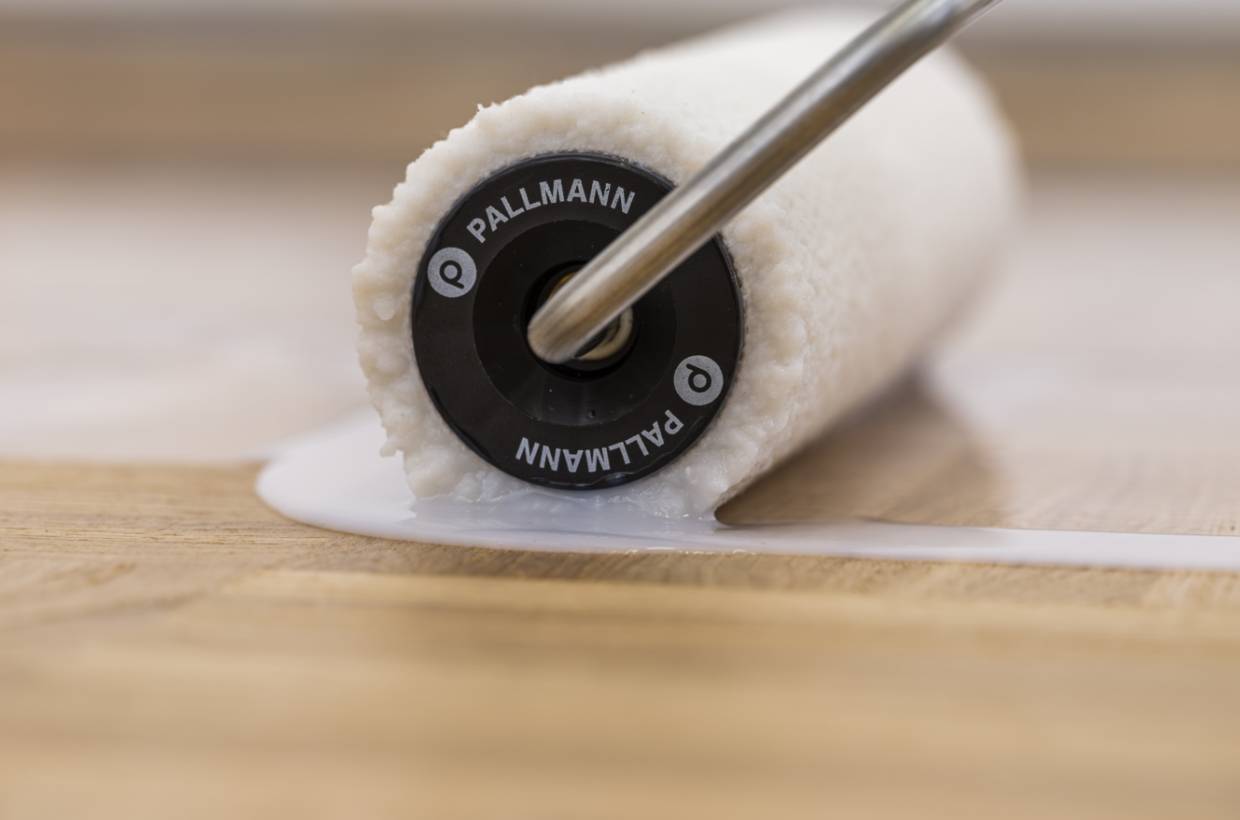


Easy to maintain and hard-wearing, sealed parquet (or varnished parquet) has many appealing qualities. However, before choosing this floor covering, there are certain things you need to know. Here is some advice from Ben, our manager, who tells you what you should know before deciding whether or not to opt for it.
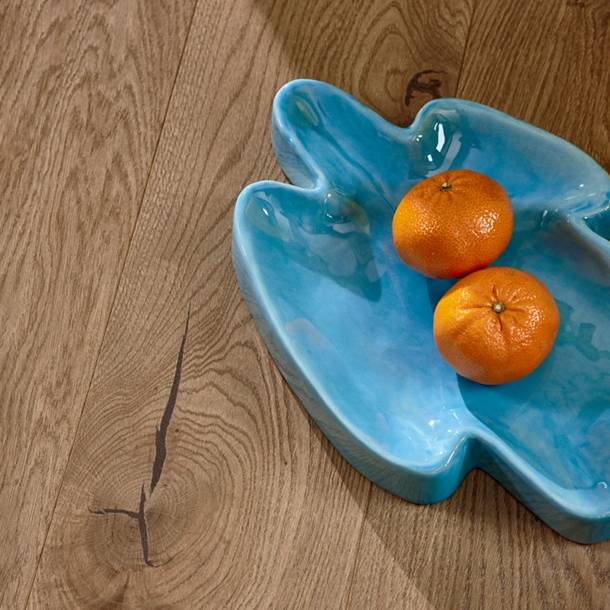
Parquet “Boen – Eiche Medium Grey_LHD Castle”
What is sealed parquet?
Sealing or varnishing parquet amounts to the same thing. The purpose of this finish is to apply a coating to the bare wood, forming a protective film on the surface that provides lasting protection against wear over time, foot traffic, impacts and, to a certain extent, moisture.
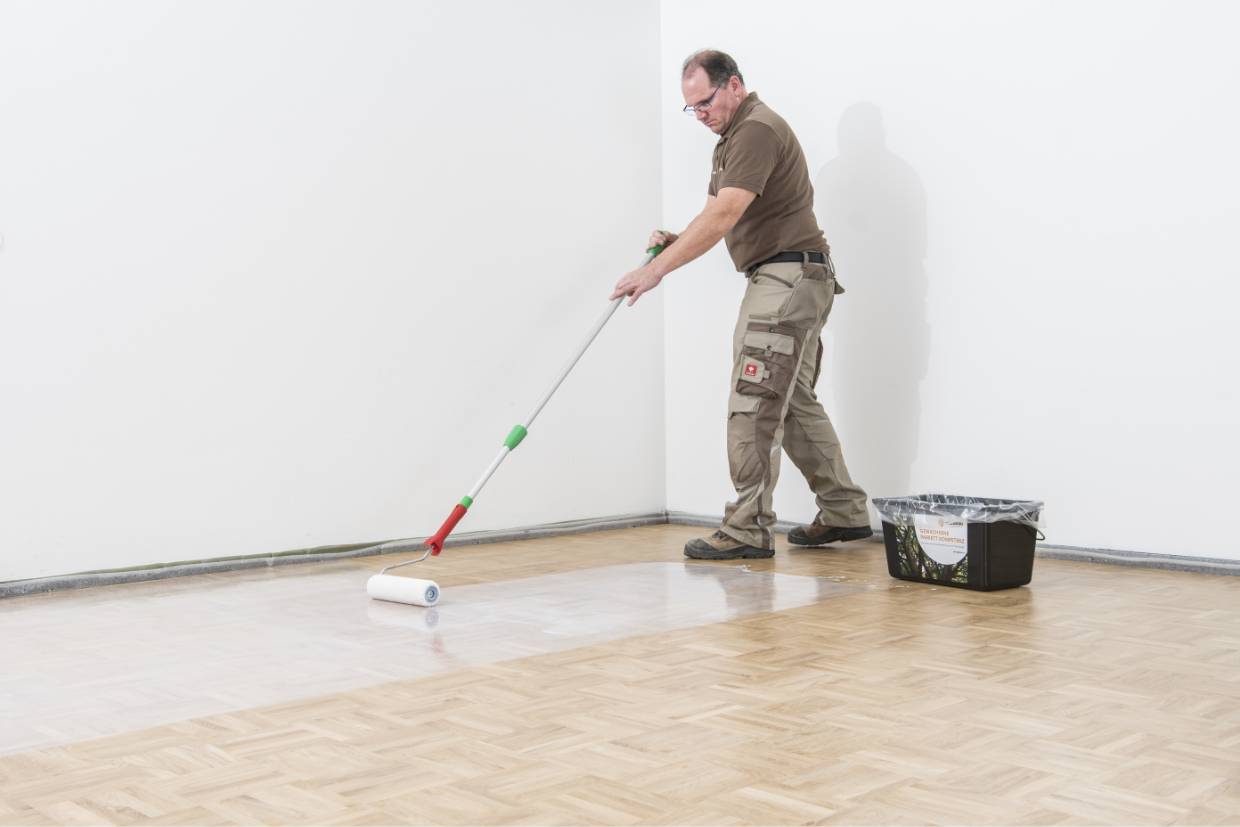
Applying varnish to bare parquet
The transparent film formed by the varnish seals the pores of the wood, preventing sticky stains (such as food or grease) from penetrating deep into the wood.
Sealing is a common finish in rather classic-style interiors; it suits every room in the house and is also ideal for offices and high-traffic areas such as shops and restaurants.
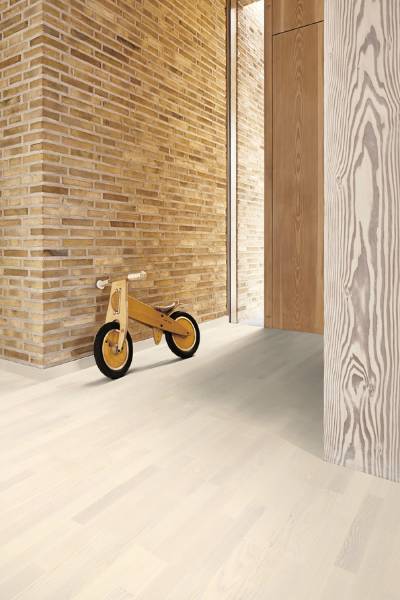
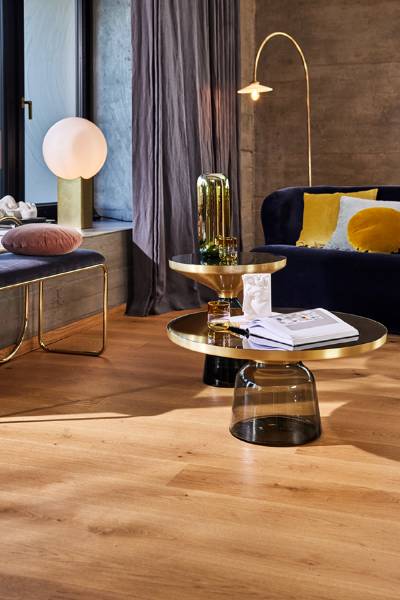
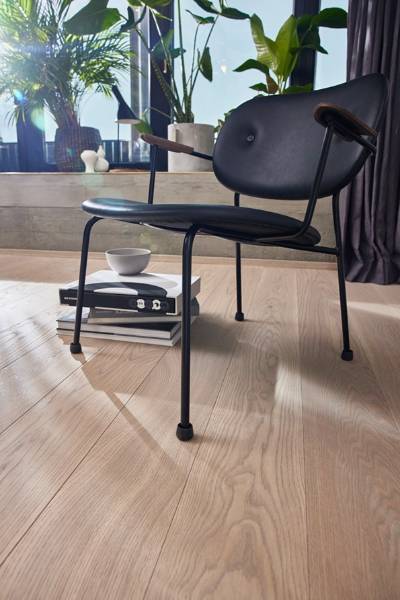
BOEN-brand parquet – factory-varnished
All parquet floors (solid and engineered) can be varnished. Other floor coverings – and this is less well known – such as linoleum, cork, self-levelling compound (levelling mortar) and concrete can also be varnished. Laminate flooring, on the other hand, which should not be confused with parquet, is not varnished.
What are the benefits of sealed parquet?
It is easy to maintain
Its maintenance is very simple, just dust it with a vacuum cleaner or a cloth. In case of sticky dirt, you just need to clean it with a slightly damp mop, adding a neutral soap to the water if necessary. For more information on the maintenance of your floors, we invite you to consult this other article of our blog.
It can be renovated
Another advantage of parquet is that the wood can be sanded back to bare wood, allowing it to be repaired and/or completely renovated. Although sanding can be laborious (especially if you don’t have the right equipment or don’t call in a professional), it removes scratches and makes the floor almost as good as new.
Bear in mind, however, that the number of times it can be sanded depends on the thickness of the wood or of its wear layer.
Many types of finish are possible
Varnished parquet will not necessarily be glossy. Varnish manufacturers have developed products offering more matt finishes that are practically invisible and imitate the look of bare wood.
It is also possible to have a parquet finish that is both varnished and stained. To do this, simply apply a first coat of coloured oil to the bare wood before sealing it. The oil penetrates the wood fibres, giving it the desired shade while accentuating the grain, which the varnish then protects.
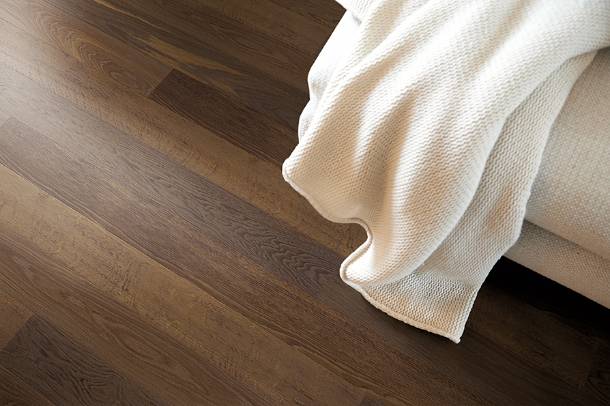
BOEN parquet with a “Live Pure” finish, which gives the natural look of untreated wood.
What are the disadvantages of varnished parquet?
Partial renovation is complicated: usually a whole room has to be sanded to avoid visible differences in shade.
Scratches that damage the varnish and reach the bare wood will darken over time.
Sealing does not enhance the natural look and grain of the wood as oil does. In addition, varnished parquet tends to age less well than oiled parquet.
Which wood species can be varnished?
Sealing therefore offers many possibilities in terms of textures and shades, as all wood species can be varnished, with the exception of teak, which requires special varnishes and primers.
For aesthetic reasons, we advise against varnishing old parquet floors. Varnish does not bring out their authenticity; for this type of wood, a waxed or even oiled finish is preferable.
Conclusion
A parquet floor cannot be left in its raw state, it will be necessary to either oil it or varnish it. We have just given you elements to help you identify the advantages and disadvantages of varnished parquet (for oiled parquet it is here)
From experience, we know that personal preference – which by its very nature differs from one person to another – is very often the most important factor when choosing between these two types of finish.
If you feel ready to start laying your new floor or renovating your existing one on your own, you will still need good “flooring” skills, time and a lot of machinery and equipment. This equipment is available for sale at our company.
Good luck!