


In some places, installing slip-resistant flooring is strongly recommended, or even mandatory. This is particularly the case for retirement homes, communal kitchens and sports hall changing rooms. The aim, of course, is to prevent falls and accidents at work.
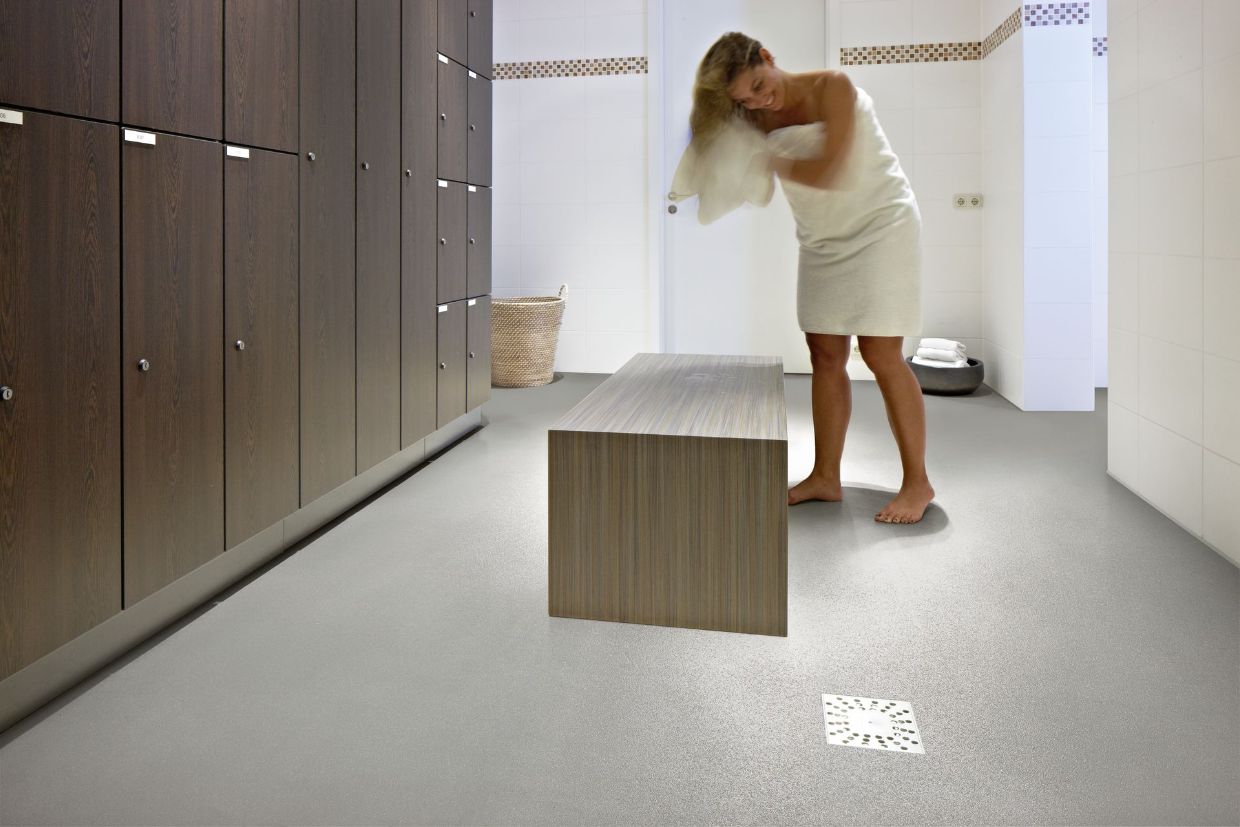
As specialists in the sale and installation of slip-resistant flooring in Luxembourg, we would like to give you a brief overview of the different types of flooring available and their uses.
First of all, let’s start by defining what floor grip is.
By definition, grip prevents slipping. In the case of floor coverings, it is the measure of how slip-resistant they are at the points of contact, i.e. the feet.
Two DIN standards classify the requirements in terms of floor grip:
- The “R standard”, which applies to areas where people walk with shoes on. This standard corresponds to the DIN51130 regulation, which measures slip resistance on an oil-covered ramp at different angles. As we will see below, it is subdivided into different categories.
- The “ABC standard”. This applies to rooms where people walk barefoot and is derived from the DIN51097 regulation. The tests are carried out in a similar way to those for the R standard, but barefoot and with water and soap instead of oil.
This little diagram will help you to picture what we are talking about.
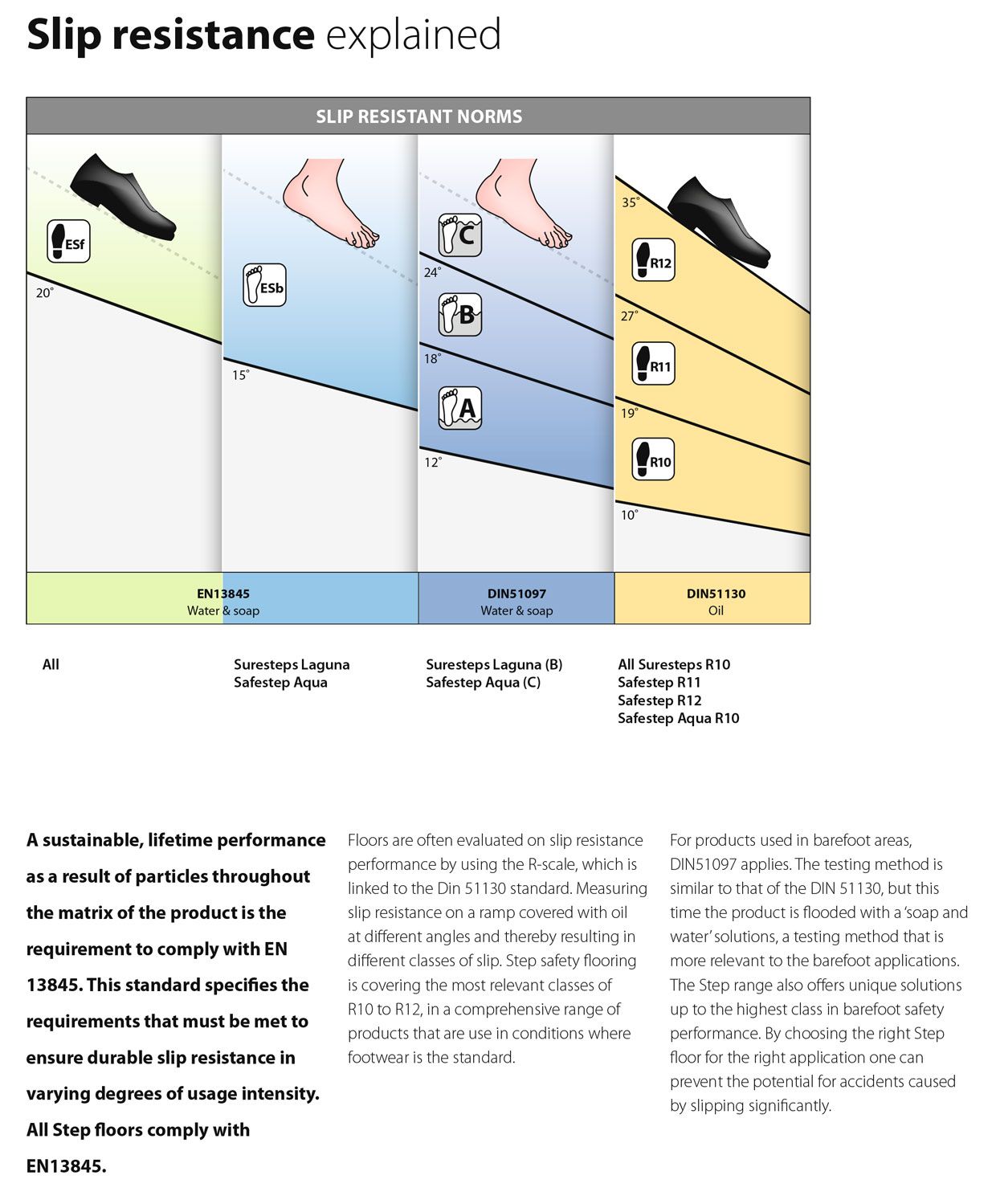
The R standard.
This standard ranks – on a scale from R9 to R13 – the grip levels of the different types of flooring, and in doing so determines their use.
R9 -> normal grip: this type of flooring is suitable for areas such as a dining room, living room or bedroom. R10 -> medium grip: floors rated R10 can be laid in an entrance hall, a kitchen or a bathroom R11 -> high grip: these floors are recommended, for example, for service areas behind a public bar or for refrigerated rooms. R12 -> strong grip and R13 -> very strong grip: these last two levels are generally reserved for specific uses (commercial kitchens, laboratories…) or for sloping areas such as ramps.
The ABC standard
Class A – These floor coverings with medium grip are intended for places such as changing rooms, bathrooms and saunas.
Class B – Class B floors have a high level of grip, suitable for showers or pool surrounds.
Class C – Strong grip is reserved for sloping floors at the edge of swimming pools or for steps leading into the water.
There are two ways to give a floor more grip:
1 – Choose a floor covering whose technical characteristics meet the required grip needs, for example vinyl or rubber flooring.
2 – Increase the grip of a floor covering, for example by applying a polyurethane (PU) varnish to parquet or lino.
Vinyl
For our part, we offer products from the Forbo brand, which markets the Safestep and Surestep ranges, whose slip-resistant performance is guaranteed for life.
With products from the Surestep R10 and Safestep R11 ranges, we can offer solutions for all your needs: whether in commercial kitchens, bars, laundry rooms, swimming pools, gyms, saunas, wellness areas, bathrooms for elderly people or people with reduced mobility, retirement homes or restaurants.
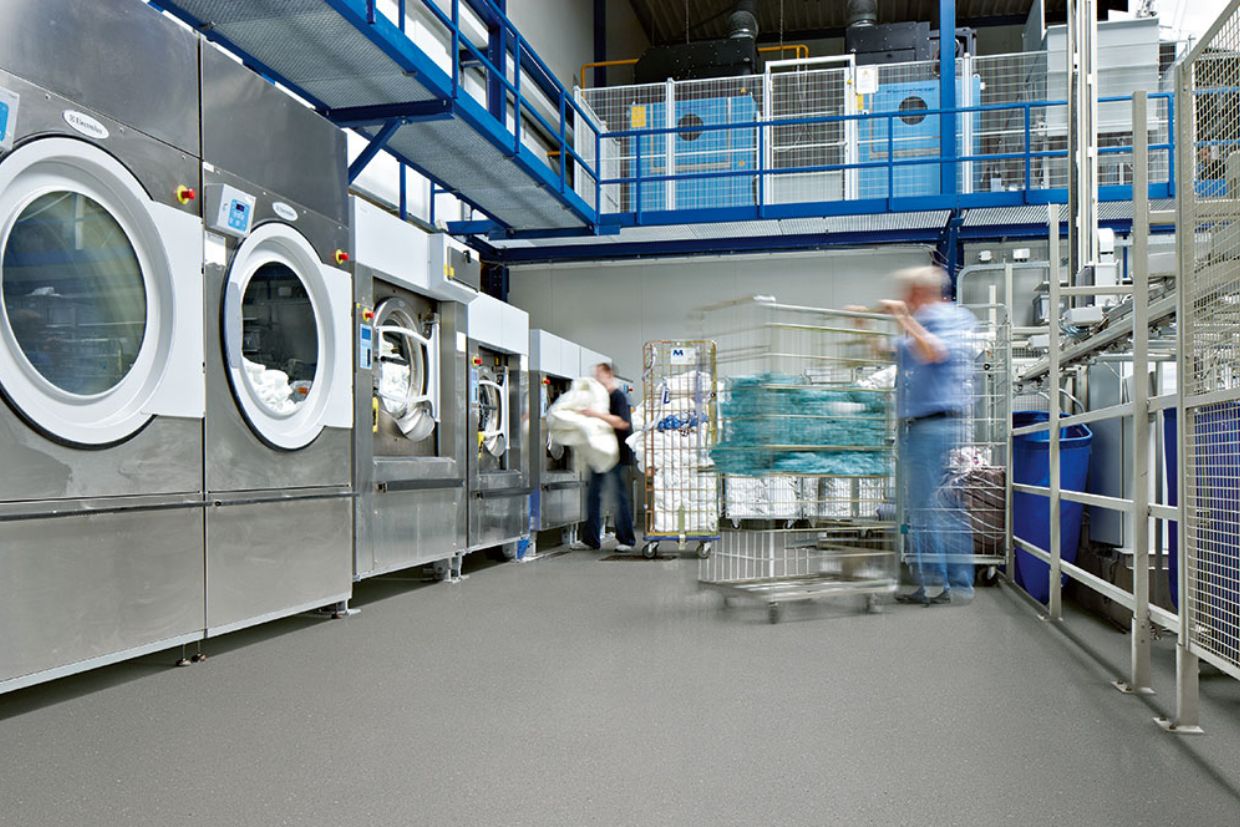
Safestep R12 in a commercial laundry
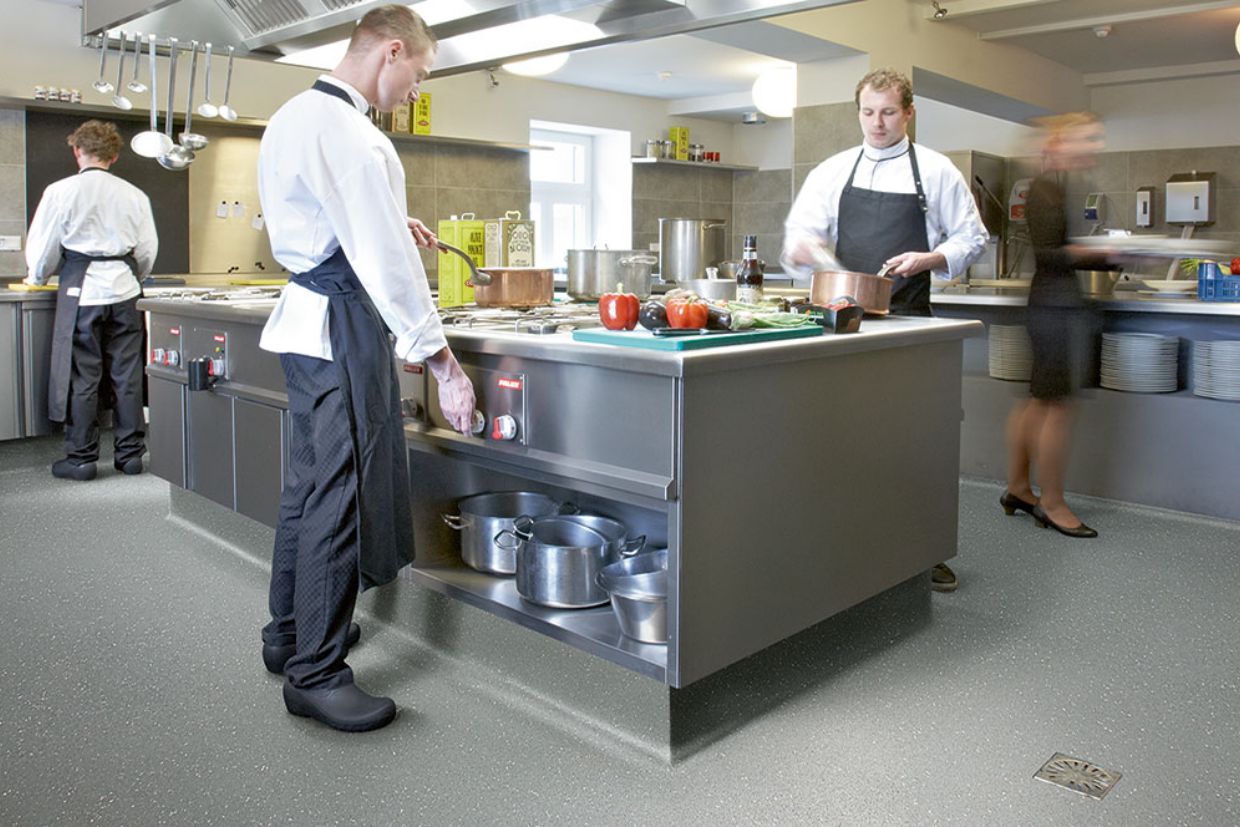
Safestep in a commercial kitchen
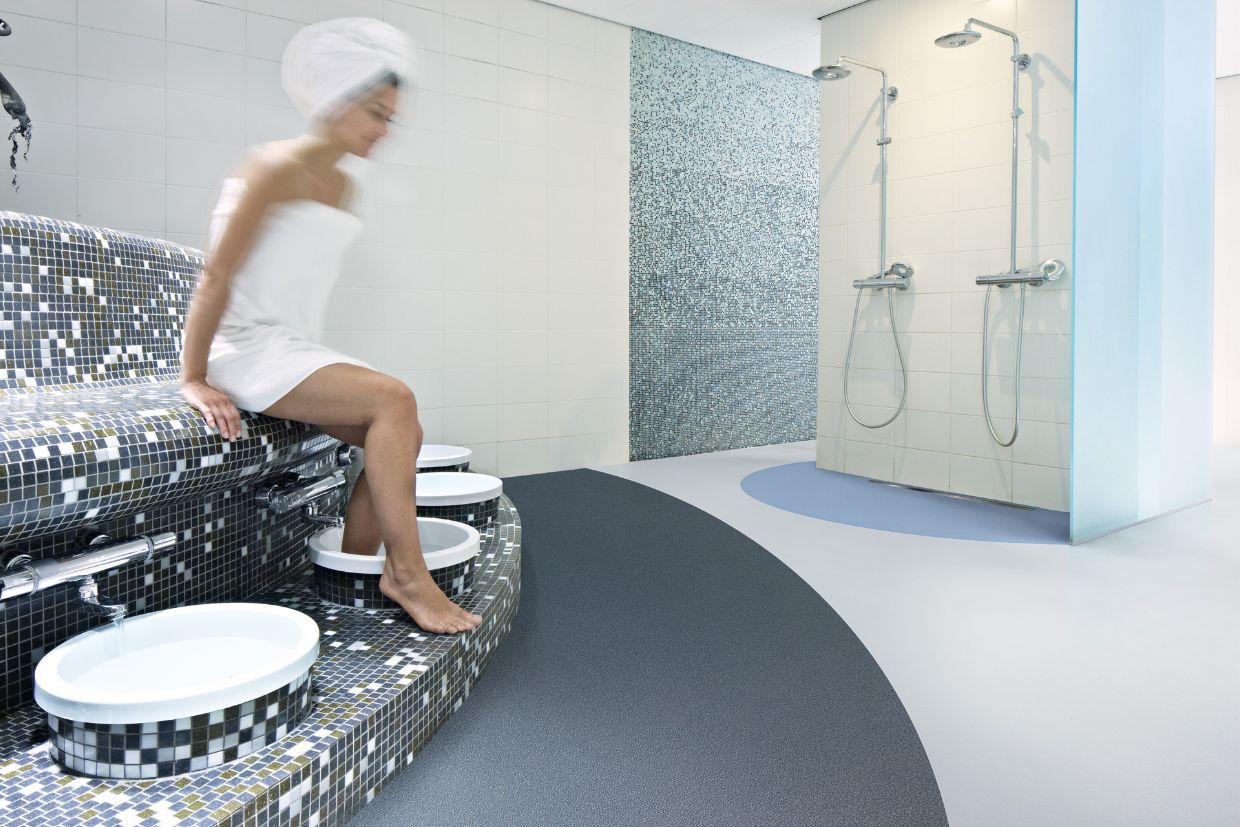
Step by Forbo vinyl in a wellness area, including a walk-in shower
Vinyl floors can also be used in walk-in showers, saunas, relaxation areas, gyms and changing rooms.
As well as offering a wide choice of colours and patterns, Surestep Laguna and Safestep Aqua have the advantage of being very easy to maintain and remain slip-resistant even when wet.
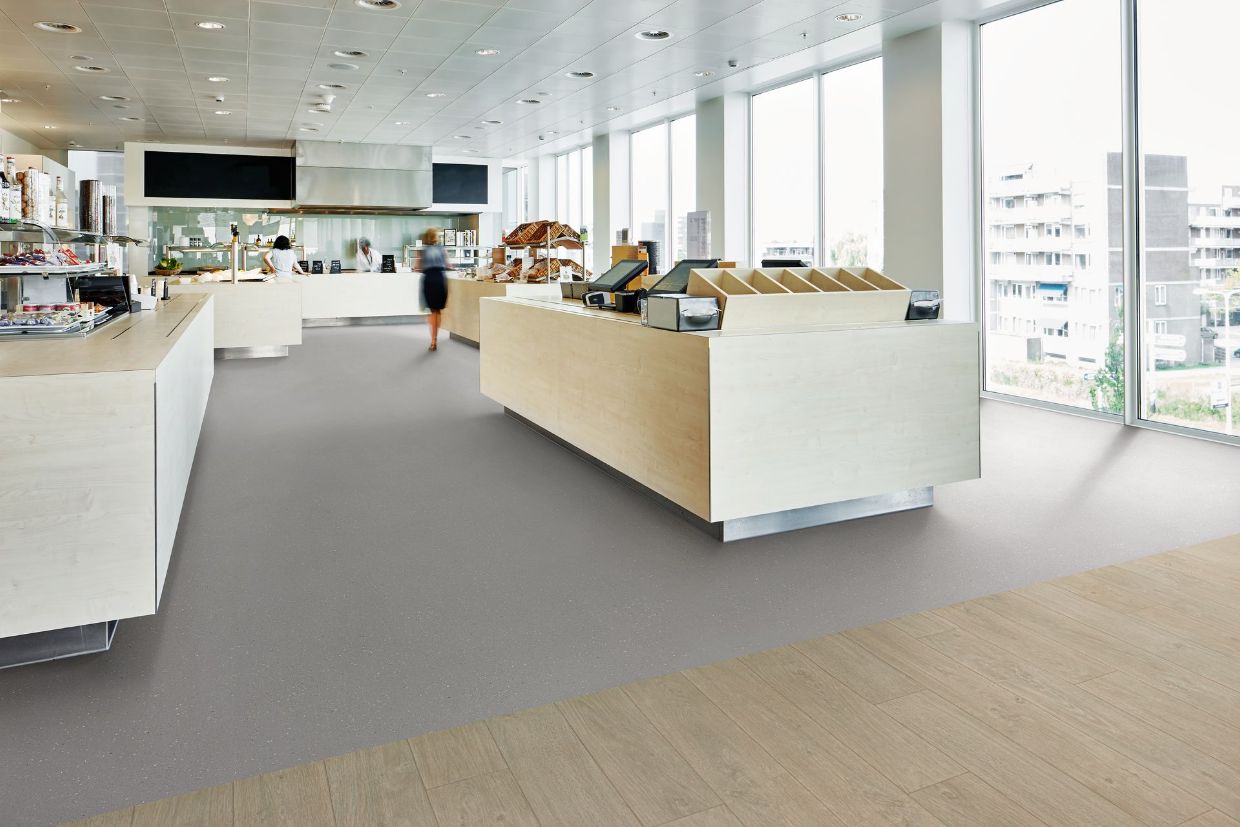
Breakfast buffet with Step by Forbo vinyl flooring
Rubber (R9 to R10)
We offer rubber flooring from the nora® brand, in particular the norament and noraplan ranges. Here are some of their features, which offer numerous advantages:
- They are made from high-quality natural and industrial rubbers;
- They are coloured using natural materials and environmentally friendly colour pigments;
- They are made without PVC, phthalate plasticisers or halogens;
- They do not affect indoor air quality, thanks to their low emissions;
- They have flame-retardant properties (standard EN 13 501);
- They are easy to maintain;
- They are moisture-resistant and do not swell when cleaned with large amounts of water;
- They do not need surface protection such as varnish or wax, and they still look new even after many years of use;
- They make walking more comfortable;
- They create more pleasant acoustics by significantly reducing footstep noise;
- They are slip-resistant, even in wet conditions;
- And finally, their wide variety of styles and colours makes them a stylish, attractive floor covering that may well surprise you.
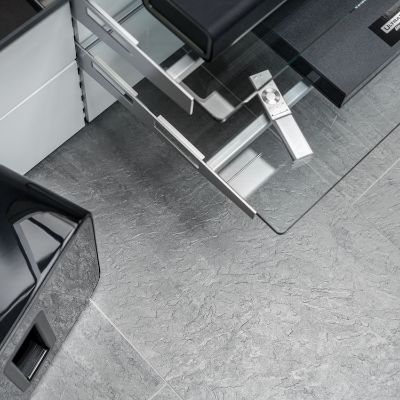
norament926-arago – natural stone print with the advantages of a vinyl floor
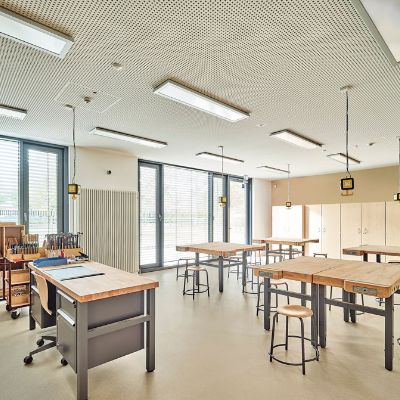
noraplan-stone in a handicrafts classroom
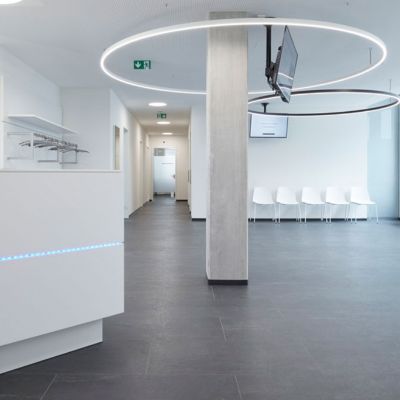
norament926-arago in a waiting room
Grip levels of nora® rubber floors:
R9: All products in the norament and noraplan ranges are tested to R9.
R10: Higher grip, at R10 level, with the collections below:
- norament 926 grano (with square structure)
- norament 926 arago
- noraplan stone (with subtly textured surface / reflection breaker)
- noraplan stone acoustic
- noraplan stone ed
- noraplan signa (with subtly textured surface / reflection breaker)
- noracare seneo
- noracare uneo
R11: Slip resistance up to this level is achieved with noraplan ultra grip
Polyurethane varnish for parquet and lino
With polyurethane (PU) varnish, there is no need to lay a new floor covering, as it is applied to existing parquet or lino and gives it an R10 or R11 level of grip. This type of colourless varnish also provides effective, long-lasting protection for your parquet or linoleum floors against stains (oil, vinegar, wine and other contaminants…) and makes them easier to clean.
To look after a varnished parquet floor, we invite you to read our article on the subject.
Admittedly, there is no need for major work to replace the existing floor covering, but some minor work is still required.
In the case of parquet, the entire surface to be covered must first be sanded before sealing with PU varnish. To find out how to go about it, we suggest you read this other article on our blog which explains this in more detail.
In the case of linoleum, it must be thoroughly cleaned before the new coat of varnish can be applied. Contact one of our team members to find out more about the work involved.
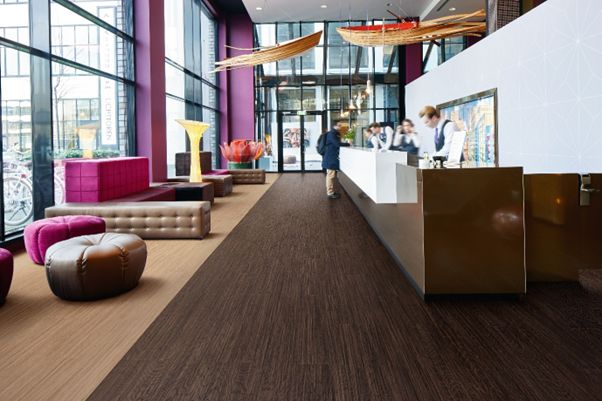
Forbo Marmoleum_Modular linoleum tiles with a wood look
Conclusion
There you have it – you now know a little more about slip-resistant floors. If you still have any doubts or need further advice, contact us and make an appointment at our showroom: we will show you a wide range of samples and be happy to advise you.